
Check Article 4, HMO density, planning likelihood and projected yields for any London postcode. Trusted by investors & landlords across all London boroughs.
Saving on feasibility cost
Time taken to generate report
The most accurate and up-to-date planning data available in the UK.




























London’s HMO rules are the most fragmented in the UK. HMO Checker cuts through them: checking Article 4 status, planning likelihood, HMO density, licensing tier and projected yields for any London postcode instantly.
HMO Checker checks planning history, approval rates and Article 4 status for any London postcode instantly, borough by borough.
Explore Planning Analysis
Access projected room rents, gross and net yield calculations and commercial valuation uplift based on local London market data.
Explore HMO Yield & ROI
Our Maps feature lets you see where HMO reports have been run across London. Each pin shows whether the report result was Great, Good, or Poor.
Explore HMO Maps
HMO Checker evaluates density within a 100-metre radius so you know whether a conversion is likely to get approved before you make an offer - critical in a city where density policy is one of the most common reasons for refusal.
Verify whether your London property falls within an Article 4 area. Covers all 33 London planning authorities, from borough-wide directions to ward-level restrictions..
Explore HMO Sourcing
Verify whether your Manchester property falls within an Article 4 area. Covers Manchester City, Salford, Oldham and all Greater Manchester boroughs.
Explore Article 4 Checker
London’s HMO market can deliver strong yields in the right postcode, but it is by far the hardest UK city to underwrite with confidence.
Unlike a city working to one council’s policy, London has 33 separate planning authorities, and each one sets its own Article 4 position. Around two-thirds now require full planning permission for any small HMO conversion.
Licensing adds a second, separate layer on top. Mandatory licensing applies nationally to any HMO with five or more occupants from two or more households, but most London boroughs also run additional licensing (extending the requirement to smaller HMOs) or selective licensing (covering all private rentals in a designated area, HMO or not).
The difference between a viable deal and a costly mistake often comes down to a single postcode – and that’s exactly what HMO Checker checks.
Most UK cities you can learn once. Manchester has ten councils and a handful of Article 4 directions between them. Birmingham, Liverpool and Edinburgh are single planning authorities. London has 33.
That matters because Article 4 status in London isn’t one rule – it’s three:
The practical effect is that two HMO deals in neighbouring postcodes, on paper almost identical, can have completely different planning and licensing requirements.
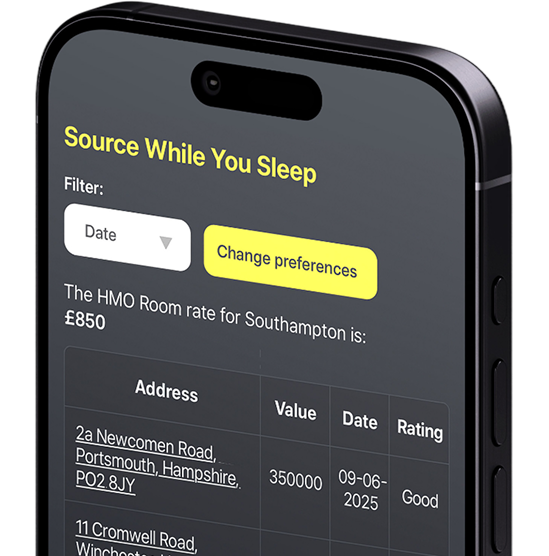
Run any London postcode through HMO Checker and get your full planning, density, licensing, yield and financial report in seconds.


Property Developer
Property Developer
Avenue 1 Holmes
Landlord, London
Try our suite of free tools for investors and landlord in Manchester
Quickly calculate the value of any HMO deal with our free HMO valuation calculator.
Appraisal Calculator >
Calculate a tailored cost estimate based on typical benchmarks used across the industry.
Conversion Calculator >
Our free Article 4 Checker will verify whether your property falls within an Article 4 directions area in the UK.
Article 4 Checker >
Yes. HMO Checker uses live planning and licensing data from all 33 London planning authorities — the 32 boroughs plus the City of London — covering everything from Barnet to Bexley, Harrow to Havering.
Yes, and it's more fragmented than anywhere else in the UK. Around two-thirds of London boroughs now have an Article 4 Direction in force for HMO conversions. Some, like Newham, Tower Hamlets, Waltham Forest and Barking & Dagenham, apply borough-wide.
Others, including parts of Southwark, Lambeth and Haringey, only cover specific wards or postcodes. A number of boroughs currently have no HMO Article 4 direction in place at all, though the list has been growing year on year.
Each of London's 33 boroughs is its own local planning authority and sets its own Article 4 and licensing policy independently.
There's no single "London rule" — the position for a property in Walthamstow can be completely different from a property in Wimbledon, even though both are inside the M25. That's the core reason a postcode-level check matters so much more in London than in most UK cities.
Article 4 is a planning control — it decides whether you need planning permission to convert a property into an HMO in the first place.
Mandatory, Additional and Selective Licensing are separate housing controls that decide whether you need a licence to legally let the property once it's an HMO (or, for Selective Licensing, any rental property at all). A London property can be affected by one, some, or all of these at once.
It depends heavily on borough. Outer London boroughs such as Barking & Dagenham, Croydon and Enfield tend to offer stronger entry yields, though several now carry borough-wide or area-specific Article 4 restrictions.
Inner London locations with strong professional or student demand can command higher rents per room but come with higher purchase prices and, often, tighter licensing. There's no single "best" borough — it comes down to matching the right postcode to your budget and strategy, which is exactly what HMO Checker is built to help with.
HMO density refers to the concentration of HMOs within a given area.
Many London boroughs use density thresholds, alongside policies like "no more than X% of properties on a street," as a factor in deciding planning applications — where concentration is already high, further conversions are more likely to be refused. HMO Checker checks density at postcode level so you can assess planning risk before making an offer.
Mandatory HMO licensing applies to any property with five or more occupants from two or more households, regardless of borough.
On top of this, most London boroughs run an Additional Licensing scheme extending the requirement to smaller HMOs, and some — including parts of Southwark, Lambeth and Croydon — run Selective Licensing, which requires a licence for any privately rented property in a designated area, not just HMOs.
HMO Checker covers the whole of the UK. Here are some of the key areas HMO investors may be interested in:
One of the UK's strongest HMO markets. Borough-wide Article 4 across the city makes postcode-level data essential.
Manchester HMOs >
Strong student demand from the University of Southampton and a growing professional population, with Article 4 restrictions across key postcodes.
Strong yields, an active investor market and expanding Article 4 coverage across the city make due diligence more important than ever.
Birmingham HMOs >
Strong rental demand from students and professionals, but Edinburgh's HMO licensing is tightly controlled in the UK.
Growing professional demand and competitive yields, with Article 4 now affecting key investment areas across the city.
Scotland's largest HMO market operates under a distinct licensing regime, stricter than most of England.