

Table of Contents
- What is HMO property sourcing?
- HMO Sourcing in 2026
- Buying an HMO vs Converting an HMO
- Methods for sourcing HMO properties
- Things to look out for in a potential HMO property
- Choosing the right location for HMO investment
- Tools to help you with HMO sourcing
HMOs (Houses in Multiple Occupation) are an attractive investment strategy due to their high demand and higher rental yields in comparison to standard BTL properties. In short, an HMO is a property rented out to 3 or more unrelated tenants who share facilities such as kitchens, bathrooms and living spaces, and are particularly popular among students and young professionals who don’t necessarily have the money for private accommodation or are only looking for flexible living.
When it comes to HMO property sourcing, there is a fair amount that should be considered before jumping straight in and buying a property to convert. With different local restrictions in place from council to council as well as building regulations, planning permission and HMO licensing to consider, sourcing the best property in the best location is a decision that can come with a lot of pressure. We’ll aim to provide you with some top tips on finding HMO properties as well as techniques, pros and cons of buying HMOs vs conversion properties and core considerations.
What is HMO property sourcing?
HMO property sourcing is essentially the process involved in identifying, assessing and securing residential properties that are either suitable to be converted into HMOs or are already functioning as HMOs. Understanding this process is crucial to a successful HMO investment strategy.
Ultimately, the goal here is to find a property that will deliver strong returns, will appeal to potential tenants and will be compliant with all local regulations.
What is actually involved in HMO property sourcing?
The process of HMO property sourcing is in many ways similar to sourcing BTL properties. However, there are some differences and considerations when it comes to HMOs. It can be broken down into a few steps:
- Identify investment areas – This might include areas you are personally interested in and well as areas with strong rental demand from potential tenants like students or young professionals. You should also consider local restrictions amongst certain areas, such as Article 4 or licensing requirements.
- Find suitable properties – There are several ways to find properties, such as the standard route of online portals like Rightmove and Zoopla, speaking to local estate agents and off-market deals through networking or direct vendor marketing.
- Assessing HMO potential – Ask yourself whether or not the property layout will be suitable as an HMO. Can the layout be configured for 4+ tenants? Is there a large square footage area to work with? Loft space? Will room sizes meet minimum standards?
- Estimating returns – Once you’ve selected a property, running the numbers on rental returns, conversion costs and management will help you understand if it’s a profitable investment or not.
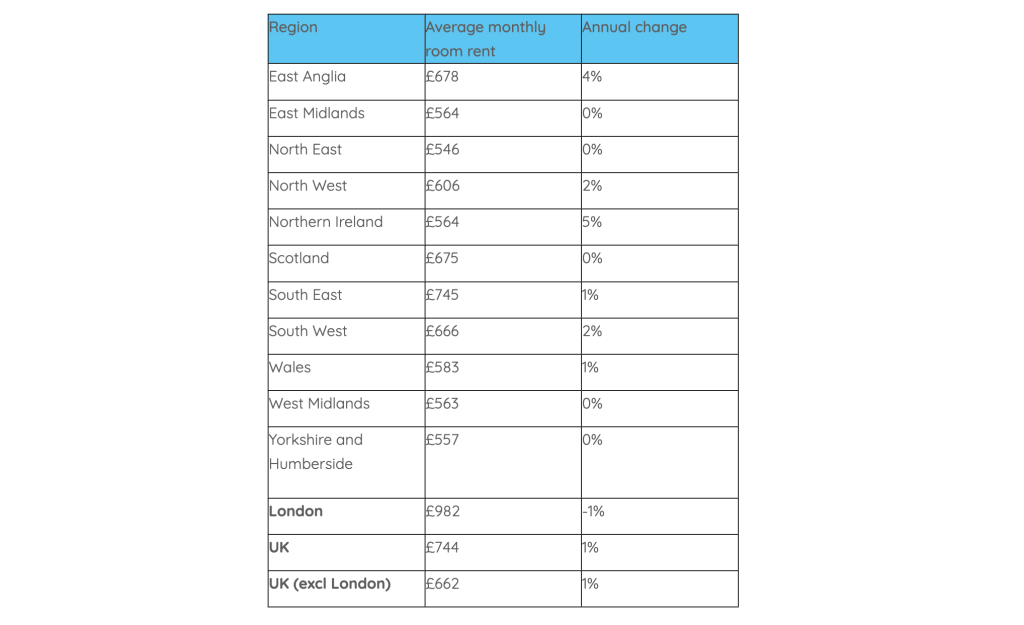
- Deal analysis – Assess local HMO competition and rental rates in the area. You can use tools like SpareRoom to get an idea of demand and rates in different areas.
- Securing the deal – This includes making offers, arranging surveys and working with lenders or brokers.
Should I use an HMO sourcing agent?
As with anything, there are pros and cons to each as this will really depend on whether you are willing to pay a sourcing agent’s fees and how much confidence you have in your ability to source properties yourself – i.e. if you are a complete beginner. However, if you do work with a sourcing agent, always ensure they are compliant with:
- The Property Ombudsman (TPO)
- ICO registration
- Client Money Protection (CMP)
- Private Rented Sector Database – This is a new 2026 requirement for all those involved in the management or sourcing of rental properties.
Why HMO sourcing matters
A well sourced HMO can make all the difference between a high-yield asset with long-term tenants vs a low returns, unattractive property in a low demand area. This is why sourcing is arguably the most important aspect of your HMO investment strategy. If you get this right, the rest of the process can be a lot easier.
Example: Let’s say you’re targeting Birmingham for a 5-bed HMO. You find a 3-bed terraced house near a university. Through research, you discover it’s not in an Article 4 area, and the layout allows for easy conversion. You estimate a £30k refurb, with expected rent of £600 per room/month.
Total rent = £3,000/month vs. mortgage + bills = £1,500.
This is the essence of strategic HMO property sourcing.
HMO Sourcing in 2026
The fundamentals of property sourcing remain consistent, but the 2026 market demands a more focused approach. Finding a high-yield HMO today is less about spotting a bargain and more about considering compliance before you commit. With the full implementation of the Renters’ Rights Act 2025, the relationship between location and tenant longevity has changed significantly.
The most significant shift this year is the abolition of fixed-term tenancies in favour of assured periodic tenancies. Because tenants can now legally provide two months’ notice at any point, your sourcing strategy must prioritise tenant stickiness. Investors are increasingly looking for areas near major hospitals, regional tech hubs, or large-scale infrastructure projects. These professional tenants provide the long-term income stability that 2026 lenders now prioritise over the traditional student cycle.
Under the government’s Warm Homes Plan, the 2030 deadline for an EPC C rating is no longer a distant thought. In 2026, savvy investors are using modern sourcing tools to filter for properties that already hit these targets without a complete overhaul.
Finally, sourcing in 2026 is seeing a shift toward Sui Generis opportunities. As local councils continue to tighten restrictions on smaller (C4) HMOs through borough-wide Article 4 directions, many professional investors are sourcing larger 7+ bedroom projects from the outset. These larger assets often provide a more robust buffer against the increased management costs and higher regulatory standards.
Should you buy an existing HMO or convert a property?
One of the considerations when it comes to HMO sourcing is weighing up whether or not you should buy an HMO property that is already converted vs sourcing a property to convert into an HMO. Both routes can be profitable, but the right choice depends on your experience, budget, risk appetite, and strategy. We have covered each of these below:
Buying an HMO property
Pros
- Already licensed & compliant: In most cases, purchasing an existing HMO means you’ll be buying a property that is already licensed and compliant, which means you’ll save the time, money and stress that’s involved with converting properties to HMOs
- Faster time-to-market: When you buy an HMO property, you can generally start generating rent almost immediately. In some cases, the property may already have tenants in situ which can mean cash flow from day one.
- Proven rental income: Given the property is already functioning as an HMO, projecting your expected returns is far easier and lenders can be more willing to offer finance as there is evidence to submit of rental income.
Cons
- Higher upfront cost: You are likely to pay a lot more for an existing HMO given that the asset you are buying is already generating income. This means the yield can be lower compared to conversions.
- Less control over layout: If the HMO you purchase is dated or has any issues, this could have an impact on demand or sometimes even compliance. You’ll be less able to set it up in the perfect way to market to your ideal tenants.
- Harder to source: In general, it can be harder to source an existing HMO vs sourcing a conversion given that the total number of HMOs on the market is lower and landlords/investors are less likely to sell off an income-generating asset.
Ultimately, buying a ready-made HMO is usually a better strategy for beginners, those wanting immediate cash flow or people who prefer low risk and quick execution.

Convert a property into an HMO
Pros
- Control over layout & compliance: With a conversion property, you have far more control over layout. This means you can create a space that exceeds current HMO standards and create layouts that increase tenant satisfaction and marketability.
- Cheaper to purchase initially: Buying a regular 3-bed or 4-bed house is generally cheaper upfront than buying a licensed HMO.
- Potential for capital uplift: Refurbishing a property, particularly if purchased at a good price, has high potential for appreciation and high rental yield.
- More properties to choose from: There are far more 3-bed or 4-bed houses available to buy vs existing HMOs.
Cons
- Time and labour intensive: There is a lot of work and time that goes into HMO conversions, including refurbishment costs, licensing, tenanting and planning where required.
- Restrictions and regulations: You will have to deal with restrictions involved in HMO conversions, such as planning permission, building regulations, Article 4 and licensing.
- Potential resistance from councils or neighbours: Not all councils support HMO growth and neighbours can resist against HMO conversions. This is why picking the right property and area is so crucial.
- Increased lead times for EPC upgrades: In 2026, the high demand for heat pumps and insulation specialists means conversion projects can take 2-3 months longer than they did in 2024.
Converting a property to an HMO is usually best for experienced or hands-on investors and those looking at long term growth.
Methods for sourcing HMO properties
You can employ both on-market and off-market strategies when sourcing or buying HMO properties. As mentioned earlier, you can work with a sourcing specialist who can do a lot of this heavy lifting for you for a fee. However, our tips will focus on doing the sourcing yourself.
On-market Strategies
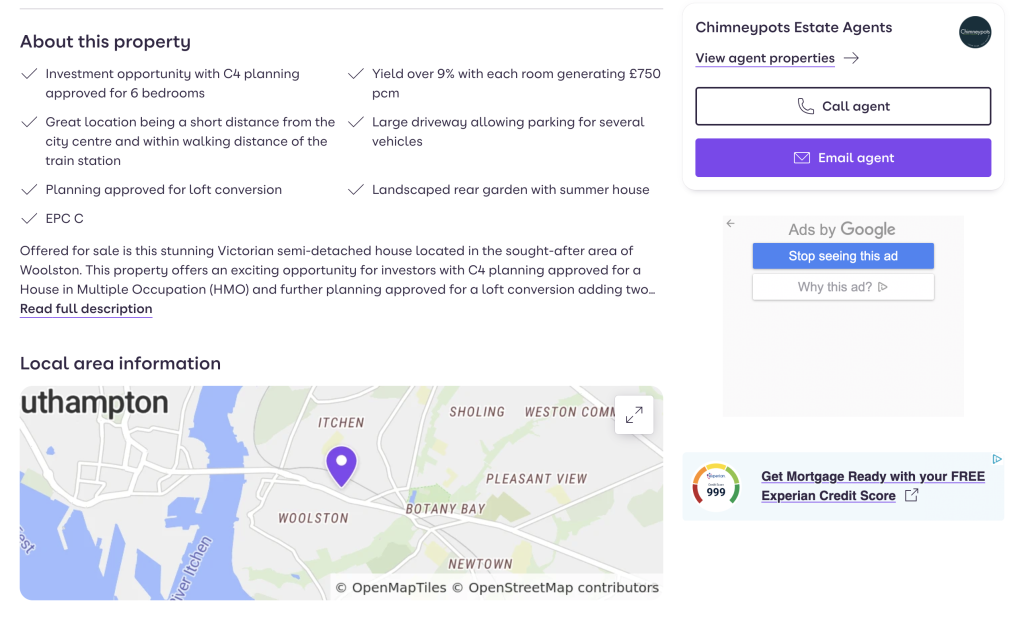
Standard property sale websites like Zoopla and Rightmove are a good place to start. If you are taking the route of buying an HMO property, try using keyword filters such as “multiple occupancy”, “student let” or “tenanted”. If not, filtering using number bedrooms/bathrooms and property type will help you find house configurations that meet your criteria for conversion.
In addition, you could also register with estate agents who specialise in investment properties.
Off-market strategies
While online platforms like Rightmove and Zoopla can work, many of the best HMO opportunities never make it to the open market. These are known as off-market deals, and they’re often cheaper, less competitive, and more flexible in terms of negotiation.
One method includes direct-to-vendor marketing, which means reaching out directly to property owners who might be interested in selling their property, meaning you can bypass letting agents all together. This could include methods like leaflet drops or even writing letters.
In addition, networking at landlord or investor meet up such as local landlord groups, PIN meetings (Property Investors Network), or BNI-style meet up can lead to warm referrals and insider opportunities.
What to look for in a suitable HMO property
In HMO property sourcing, finding a property that is going to tick all the boxes in terms of size, layout, finance and compliance is crucial. You should consider your financial goals, your ideal tenants as well as whether or not the layout and room in the property will meet minimum room size standards and facility requirements.
Size and layout
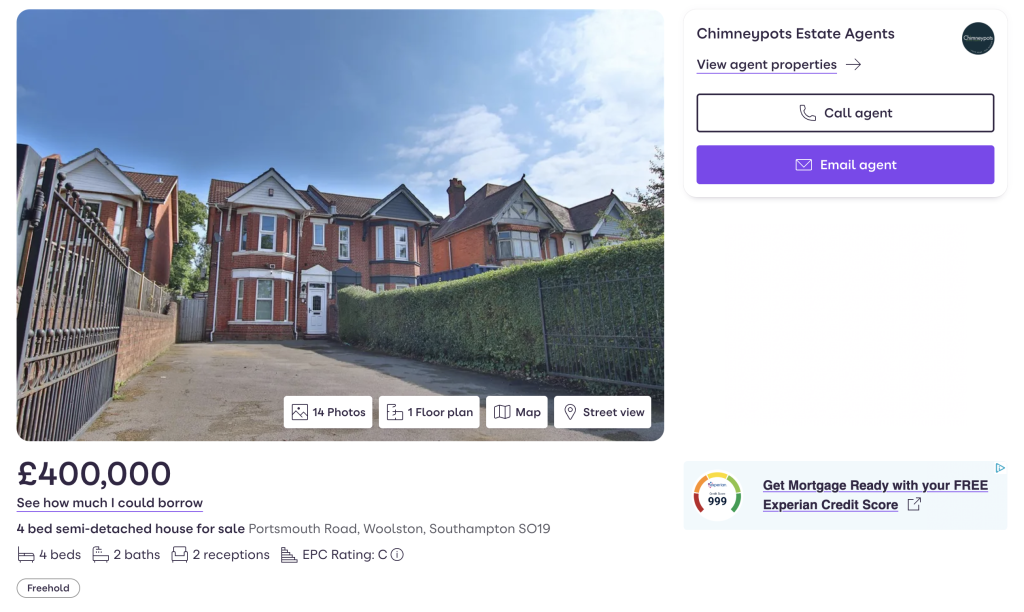
Consider the size and layout of the property you are assessing. Ideally, you’ll want to find a property with large internal square footage that exceeds minimum room size standards comfortably. This includes:
- Single bedrooms are at least 6.51 m²
- Double bedrooms are at least 10.22 m²
In addition, look for additional spaces or rooms that could be converted into additional bedroom spaces or communal areas. This might include reception rooms or lofts. A straightforward and “boxy” layout may also be easier to convert than complex layouts.
Bathroom & Kitchen potential
Councils generally require a certain ratio of bathrooms and kitchens to tenants. Therefore, assessing if there is space for en-suites could be considered.
In addition, a spacious kitchen is crucial and tenants will likely want to prepare meals around similar times. It might be worth checking if there is scope to extend the kitchen or install a utility room where relevant.
Access & fire safety
Fire safety is a big part of HMO compliance. You should ensure the property you are looking at has multiple exits as well as wide doorways and staircases to allow for fire door installation.
It might be worth working with a fire safety officer in the early stages of HMO sourcing.
Choosing the right location for HMO investment
Getting the location right in HMO sourcing is the final hurdle on your property investment journey. As you might imagine, there are some areas that make good HMO investment locations and others that make bad HMO investment locations.
Here are the factors to consider when it comes to location:
- Look for areas with strong rental demand, particularly where there might be lots of students or young professionals
- Look for areas where the local economy is diversified, reducing the risk of mass move-outs under the new 2-month notice rules.
- University cities are likely to attract students and strong employment hubs are likely to attract young professionals
- Proximity to transport links and amenities will make certain areas more attractive
- Some areas have higher or lower property prices than others which can affect your ROI. Make sure to research house prices in different areas to weigh up your potential returns.
Here are some things to be mindful of:
- Article 4. Make sure to research whether your property falls in an Article 4 area as this will make getting planning permission challenging. Article 4 is no longer just a “city center” issue. Councils like Durham have moved to county-wide directions in 2026, making the “density check” a mandatory first step for any North East investment.
- Areas where there is already an oversaturation of HMOs, as this can impact things like demand or likelihood of planning permission.
- Consider your impact on the local area or neighbourhood.
We’ve written several articles on choosing HMO investment locations which you can explore below:
Source While You Sleep
One of the standout features of HMO Checker is Source While You Sleep, a tool designed to streamline the property sourcing process for investors. Rather than manually scanning Rightmove or other property portals, this feature continuously works in the background to identify and assess potential HMO opportunities based on your specific criteria.
Once you set your search filters, such as postcode, price range, and property type, Source While You Sleep automatically scans matching listings around the clock. Each property is evaluated using HMO Checker’s planning and density tools, checking for factors such as planning permission requirements, HMO density in the area, and permitted development potential. Every morning, you receive a curated list of potential HMOs directly to your inbox or HMO Checker dashboard, complete with full assessments ready for review.
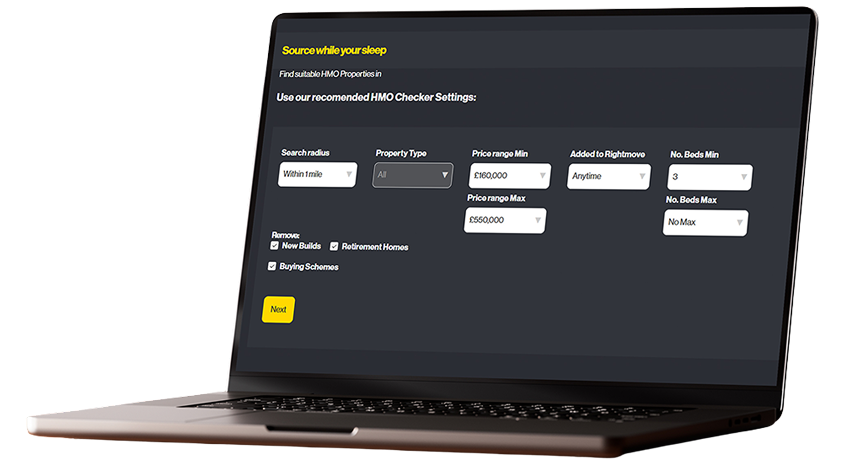
This feature not only saves time but also gives investors a competitive edge. By automatically assessing each property against realistic HMO feasibility criteria, you can focus your energy on properties that have genuine potential. Source While You Sleep ensures you never miss a promising opportunity, even while you’re offline, and helps investors make informed decisions faster than ever before.
Getting starting with HMO property sourcing
Whether you are a seasoned investor or a first time buyer, HMO property sourcing is a skill that takes time to refine in order to find the best deals at the right price in the right area that ticks all the boxes.
To get you started, we’ve got some resources that we think will be helpful in getting you started with HMO property sourcing:
- Property & Poppadoms: https://propertyandpoppadoms.co.uk/ – a property investment and networking event to get your started with off-market sourcing.
- Invest in HMOs: https://investinhmos.co.uk/property-search/ – useful for sourcing existing HMO properties for sale all across the UK. The listings will provide deals of Gross Yield and Gross Income to help you make investment decisions based on ROI.
- HMO Checker: https://hmochecker.co.uk/ – property deal sourcing and analysis tool that allows you to check individual properties across a whole range of factors in order to assess their potential without needing to do all the heavy lifting. This includes Article 4 checks, HMO density checks, expected rental income, amenities, development potential and more. New users get 2 searches for free – no credit card required.
- HMO Valuation: https://propertydata.co.uk/hmo-valuation – create an HMO valuation for free.


